The Vernacular Architecture of Light: Exploring the Farmhouse Fenestration
American farmhouse window styles the American farmhouse is more than a mere aesthetic category; it is a structural manifestation of agrarian pragmatism, localized material availability, and the historical necessity of climate adaptation. Within this architectural tradition, the window occupies a singular position of importance. It served as the primary regulator of light and ventilation long before the advent of mechanical climate control, and its design was dictated by the limitations of glass manufacturing as much as by the whims of style. To discuss these apertures is to engage with a history of rural survival and the eventual transition of these homes into the symbols of contemporary domestic comfort.
Fenestration in the farmhouse tradition is characterized by a “vertical bias.” Historically, the structural integrity of timber-frame and load-bearing masonry walls favored tall, narrow openings over expansive horizontal spans. This verticality was not merely a matter of taste; it allowed for the efficient distribution of natural light into the deep interiors of common-plan homes, such as the “I-House” or the “Gable-and-Wing” configurations. Today, while the structural constraints have shifted, the visual language of these tall, divided-lite windows remains the defining feature of the genre, providing a sense of scale and rhythm that connects the modern dwelling to its regional ancestors.
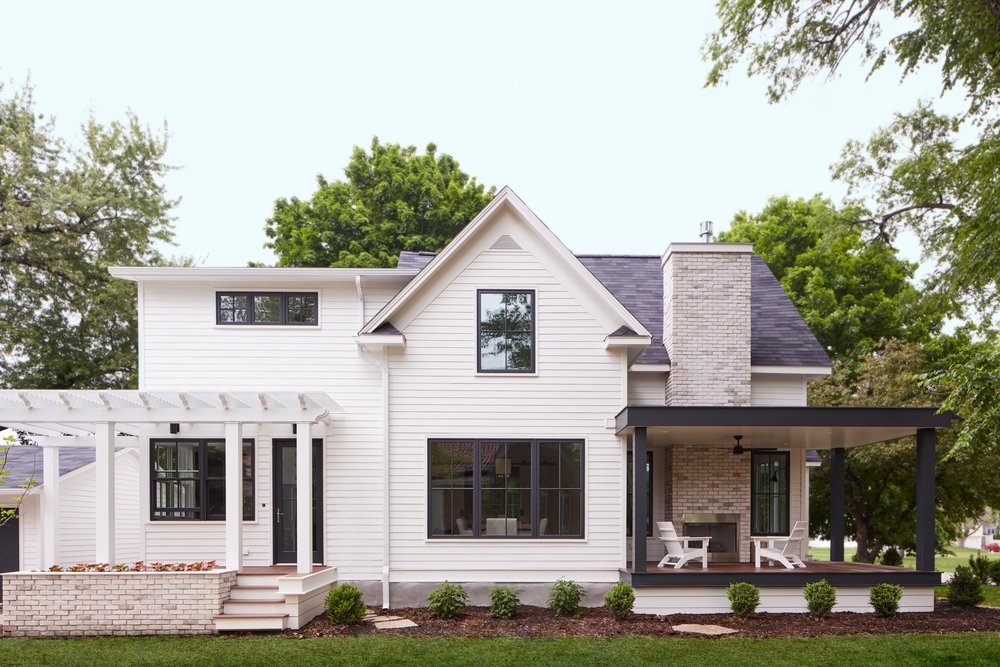
Understanding the nuance of this style requires a departure from the “modern farmhouse” clichés often seen in speculative suburban development. A truly authoritative approach looks beyond black metal frames and white siding to examine the proportional logic of the sash, the profile of the muntins, and the functional relationship between the window and the surrounding porch or eave. This analysis seeks to provide a definitive framework for evaluating the heritage, technical specifications, and long-term governance of the apertures that define one of America’s most enduring architectural movements.
American Farmhouse Window Styles: A Multi-Dimensional Analysis
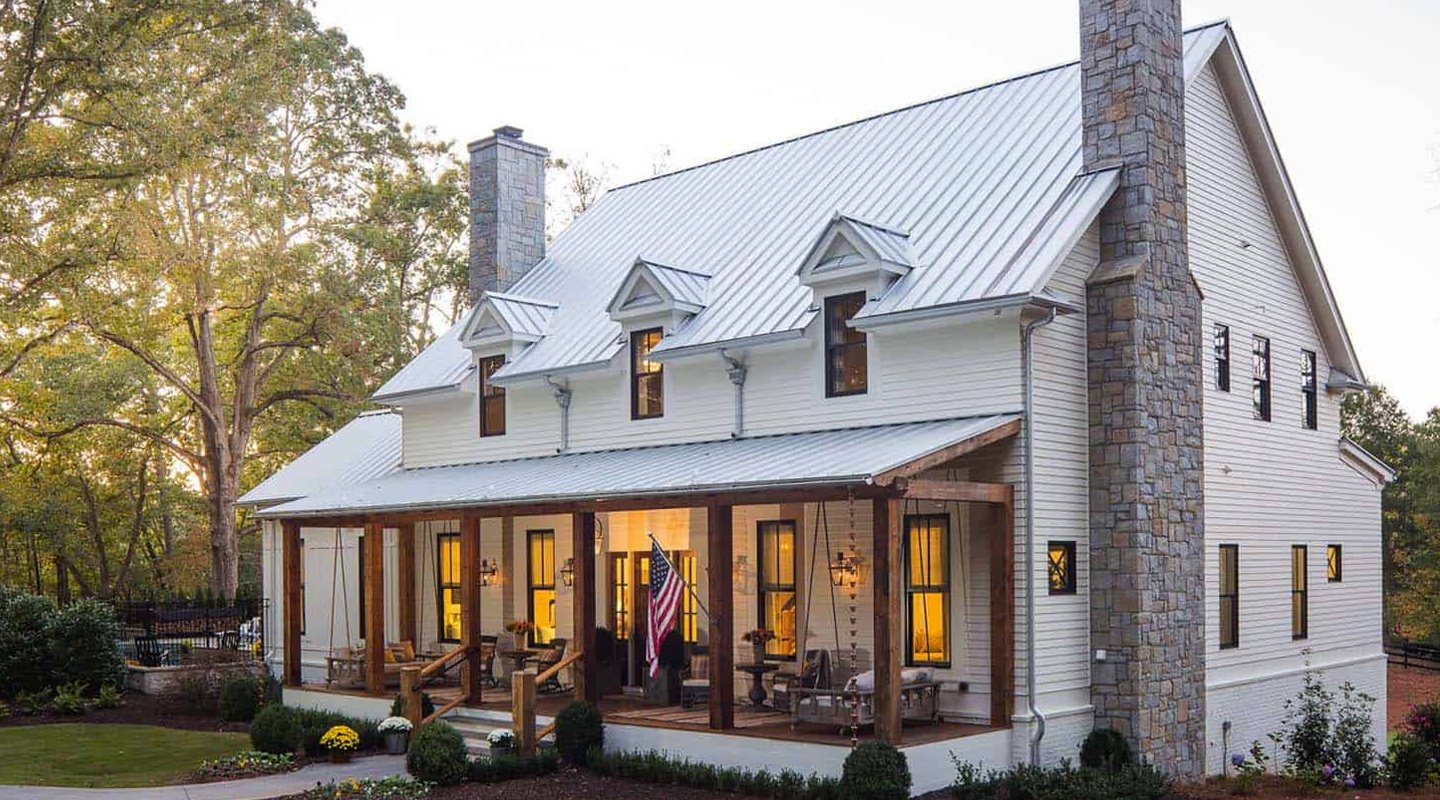
When we isolate the specificities of american farmhouse window styles, we are looking at a design language that prioritizes “additive” complexity over “subtractive” minimalism. A common misunderstanding in the broader market is that any window with a grid pattern qualifies as farmhouse. In reality, the style is rooted in a specific proportional relationship—typically a 2:1 height-to-width ratio—and a “shadow line” created by deep-set frames. The oversimplification of these elements often results in “flat” facades that lack the visual weight and historical resonance of original agrarian structures.
The risk of oversimplification is particularly high regarding the “Grid Pattern” or “Muntin” layout. Traditional farmhouse windows were defined by “True Divided Lites” (TDL), where individual small panes of glass were held together by wooden bars. This was a necessity in an era when large sheets of glass were prohibitively expensive or structurally fragile. Today, while “Simulated Divided Lites” (SDL) are the standard, the “profile” of that bar—its width and the way it tapers—dictates whether a window feels authentic or like a cheap imitation. A professional editorial eye looks for the “Ovolo” or “Putty” profiles that mimic the hand-carved joinery of the 19th century.
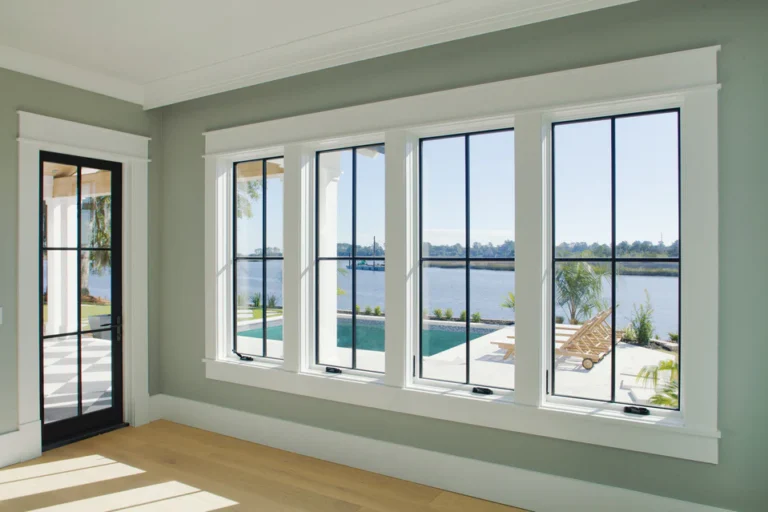
Another perspective to consider is the “Functional Cluster.” Farmhouses rarely featured isolated windows; instead, they utilized “Mulled Pairs” or “Triples” to maximize light in gathering spaces while maintaining the vertical structural columns of the wall. This clustering creates a distinct rhythm on the exterior, often punctuated by wide “Trim Boards” or “Pediments.” Understanding this style means acknowledging that the window is part of a larger system of “casing and ornamentation” that serves to protect the opening from water infiltration while providing the home with its stoic, rooted character.
Deep Contextual Background: The Evolution of Rural Fenestration
American farmhouse window styles the trajectory of the farmhouse window begins with the “Colonial Cape” and the “Saltbox.” These early structures utilized small, “Six-over-Six” or “Nine-over-Nine” double-hung windows. The glass was often “Cylinder” or “Crown” glass, characterized by ripples and seeds, which added a layer of distortion and character to the light entering the home. These windows were built into thick walls, creating deep interior sills that were often used for domestic tasks, further embedding the window into the daily life of the farm.
As the “Greek Revival” and “Gothic Revival” movements spread across the American frontier in the mid-19th century, the farmhouse window began to take on more ornamental characteristics. The “Folk Victorian” style introduced arched “Segmental” tops and more complex “Two-over-Two” patterns, made possible by the industrialization of glass manufacturing which allowed for larger, heavier panes. During this period, the “Porch Window” also became prominent—tall windows that stretched nearly to the floor, allowing for maximum airflow in the humid summers of the South and Midwest.
The early 20th century saw the emergence of the “American Foursquare” and the “Craftsman Farmhouse,” which shifted toward “Three-over-One” or “Six-over-One” patterns. This was a move toward simplification, prioritizing clear views through the bottom sash while maintaining the traditional divided-lite look at the top. This evolution reflects a broader cultural shift from the farm as a site of pure production to the home as a site of curated leisure and observation.
Conceptual Frameworks and Mental Models American Farmhouse Window Styles
To evaluate farmhouse fenestration with professional rigor, one should apply the following mental models:
1. The “Vertical Stacking” Model
This framework posits that the farmhouse aesthetic is maintained when windows are aligned vertically across floors. The “Void-to-Solid” ratio should favor the solid wall, creating a sense of protection and structural permanence.
2. The “Hierarchy of Openings” Framework
In this model, the windows are sized according to the importance of the room. The “Parlor” or “Great Room” receives the largest, most ornate mulled units, while “Service” areas like kitchens and pantries receive smaller, higher-set windows. This creates a legible “story” on the building’s facade.
3. The “Shadow Depth” Logic
Luxury and authenticity are found in the “Z-axis.” A window that is flush with the siding looks industrial. A farmhouse window must be recessed, with a thick “Sill” and “Brickmould” that create changing shadows throughout the day, emphasizing the home’s texture.
Key Categories of Farmhouse Variations
While the double-hung window is the quintessential farmhouse choice, several variations exist within the tradition, each with its own trade-offs.
Decision Logic: The “Modern vs. Historic” Pivot
When designing a farmhouse today, the “Pivot Point” is the Material Composition. If the project prioritizes “Historic Integrity,” All-Wood windows are the only choice. If the project is a “Modern Farmhouse” intended for low maintenance, Aluminum-Clad Wood or High-Definition Composite provides the look of wood with a 30-year finish.
Detailed Real-World Scenarios American Farmhouse Window Styles
Scenario A: The Midwestern “Foursquare” Restoration
A 1910 farmhouse with original but rotted “One-over-One” windows.
-
The Constraint: The homeowner wants energy efficiency without losing the thin “Muntin” profiles.
-
The Strategy: Specifying custom wood sashes with “Vacuum Insulated Glass” (VIG). This allows for a 1/4-inch glass profile that fits into the original 19th-century sash channels.
-
Result: Preservation of 100% of the architectural character with a thermal performance that exceeds modern double-pane units.
Scenario B: The New “Modern Farmhouse” Build
A contemporary residence utilizing black frames and white board-and-batten siding.
-
The Risk: Using standard “Builder-Grade” vinyl windows where the black finish will fade and the frames will look “skinny.”
-
The Strategy: Specifying “Architectural Grade” fiberglass windows with a “Deep Reveal” casing. Utilizing a “Two-over-Two” SDL pattern to add verticality to the facade.
-
Failure Mode: Choosing windows without “Sills” or “Aprons,” resulting in a “flat” look that reads as cheap rather than modern.
Scenario C: The Southern “Deep Porch” Estate
A large home with a wrap-around porch that blocks significant natural light.
-
The Strategy: Utilizing “Transom Windows” above all primary openings and increasing the window height to 7 feet.
-
Result: The transoms capture high-angle light that bounces off the porch ceiling and deep into the home’s interior.
Planning, Cost, and Resource Dynamics
The fiscal landscape of american farmhouse window styles is driven by the complexity of the “Muntin” and “Trim” packages.
Range-Based Resource Allocation
The “Opportunity Cost” of choosing an incorrect window style in a farmhouse project is the “Curb Appeal Penalty.” Because windows represent up to 30% of a farmhouse facade’s visual area, a mistake in proportion or lite-pattern can reduce the home’s market value by significantly more than the cost of the window upgrade itself.
Tools, Strategies, and Support Systems American Farmhouse Window Styles
Executing an authentic farmhouse look requires a suite of technical and design supports:
-
Muntin Profile Charts: Comparing “Ogee,” “Putty,” and “Square” profiles to match the home’s era.
-
Fractional Proportion Calculators: Ensuring the “Grid” spacing is mathematically consistent across windows of different sizes.
-
Low-E Coating Selection: Specifying “High-Solar-Gain” glass for northern farmhouses to utilize passive heating, a traditional agrarian concept.
-
Weatherstripping Systems: Integrating “Spring Bronze” or “Compression Gaskets” into wood windows to maintain historic operation with modern airtightness.
-
AAMA 2605 Finish Specs: Ensuring the “Black” or “Dark Bronze” frames will not chalk or fade for 20+ years.
-
Sill Pan Flashing: Essential for farmhouse styles, which often have wide casings that can trap water against the sheathing.
Risk Taxonomy and Failure Modes American Farmhouse Window Styles
Authenticity in this style is threatened by several compounding risks:
-
The “Scale Mismatch”: Using wide, horizontal windows in a style that demands verticality. This “breaks” the traditional rhythm of the house.
-
Seal Failure in Small Lites: Simulated Divided Lites (SDL) use adhesive to bond the grid to the glass. In high-heat environments, these grids can “creep” or fall off if the adhesive is not architectural-grade.
-
Thermal Bridging in Metal Frames: Modern “black” metal windows can get extremely hot. Without a “Thermal Break,” they can transfer that heat into the wooden framing, causing the wood to dry out and warp over time.
-
Paint Entrapment: In restored wood windows, excessive layers of paint in the “Sash Pockets” can make the window inoperable, leading to homeowners forcing the window and breaking the joinery.
Governance, Maintenance, and Long-Term Adaptation
A farmhouse window is a “Repairable System,” not a disposable product.
The Stewardship Checklist
-
Annual: Inspect the “Drip Cap” (the metal flashing above the window). If this is bent or clogged, water will rot the header.
-
Bi-Annual: Lubricate “Sash Balances” or “Pulleys.” If the window is difficult to open, users will apply uneven pressure, stripping the hardware.
-
5-Year Interval: Inspect the “Perimeter Caulk.” The wide trim boards used in farmhouse styles expand and contract significantly; the caulk will fail long before the window does.
-
10-Year Interval (Wood): Sand and re-coat the exterior sills. The sill is the “sacrificial” part of the window and requires the most protection.
Measurement, Tracking, and Evaluation American Farmhouse Window Styles
-
Leading Indicators: “Visual Alignment.” Checking if the muntins of adjacent windows align horizontally across the facade.
-
Lagging Indicators: “Energy Performance.” Monitoring if rooms with large mulled units are significantly harder to heat/cool, indicating a need for better “Low-E” glass or interior storm inserts.
-
Documentation:
-
The “Sash Map”: Recording the dimensions and lite-patterns of every opening to simplify glass replacement.
-
The Paint Code Log: Storing the exact “Sheen” and “Formula” for the trim paint, as farmhouse whites vary wildly in undertone.
-
Common Misconceptions and Oversimplifications
-
Myth: “Black windows are the only farmhouse option.” Reality: Historically, farmhouse windows were white, cream, or dark forest green. Black is a contemporary “Modern Farmhouse” trend.
-
Myth: “You can’t have large windows in a farmhouse.” Reality: You can, but they should be composed of “Mulled Units” (smaller windows joined together) rather than one giant sheet of glass.
-
Myth: “Grids make it hard to clean.” Reality: Most SDL windows have the grid on the outside, and many modern brands offer “Removable Grids” for easier maintenance.
-
Myth: “Vinyl windows look just like wood.” Reality: Vinyl lacks the “crispness” of a wood muntin and often has rounded, “melted” corners that ruin the historic profile.
-
Myth: “Farmhouses didn’t have screens.” Reality: “Full-Height” screens were a staple of American rural life to manage insects, often integrated into the exterior trim.
Ethical and Practical Considerations American Farmhouse Window Styles
In the context of the “Modern Farmhouse” explosion, there is an ethical consideration regarding “Architectural Dilution.” By reducing a complex regional history to a few visual shorthand marks (black grids, white walls), we lose the “Place-Based” intelligence of original farmhouses. Practically, this means modern “Farmhouses” in the desert of Arizona often look identical to those in the forests of Vermont, despite having completely different solar and thermal needs. A truly sustainable farmhouse window strategy prioritizes regional adaptation—such as “Deep Overhangs” in the South—over a homogenized national aesthetic.
Conclusion: The Enduring Verticality
The governance of american farmhouse window styles is ultimately about respecting the “Rhythm of the Wall.” It is the understanding that a home’s character is defined by the tension between the solid and the void. By prioritizing vertical proportions, deep shadow lines, and honest material choices, the homeowner ensures that the building remains a participant in a long-standing American narrative. A farmhouse window is not just a way to see out; it is a way to look back at a history of craftsmanship that valued permanence and utility over the fleeting trends of the moment.