How to Avoid Structural Window Damage: A Definitive Reference for Building Integrity
How to avoid structural window damage in the specialized field of building pathology, the window is rarely viewed as an isolated aesthetic component. Instead, it is understood as a complex mechanical aperture situated within a high-stress structural void. When a wall is breached to allow for light and ventilation, the gravity loads and lateral forces that once flowed through solid masonry or timber must be redirected around the opening via headers, jacks, and king studs.
As a building settles, or as environmental loads—such as snow, wind, or seismic activity—act upon the envelope, the rough opening undergoes microscopic shifts. This results in “sash bind,” sealant rupture, and eventually, the catastrophic stress-cracking of the glazing. To address these vulnerabilities, one must adopt a perspective that prioritizes the “movement joint” over the rigid attachment.
Achieving long-term resilience requires a departure from the “install-and-forget” mentality that characterizes much of modern residential construction. Preventing damage involves a rigorous understanding of flashing lifecycles, fastener schedules, and the specific expansion coefficients of disparate materials like vinyl, aluminum, and Douglas fir. This article serves as a definitive exploration into the mechanics of the aperture, providing a technical framework for architects, contractors, and asset managers who seek to maintain the equilibrium between the view and the structure.
Understanding “how to avoid structural window damage”
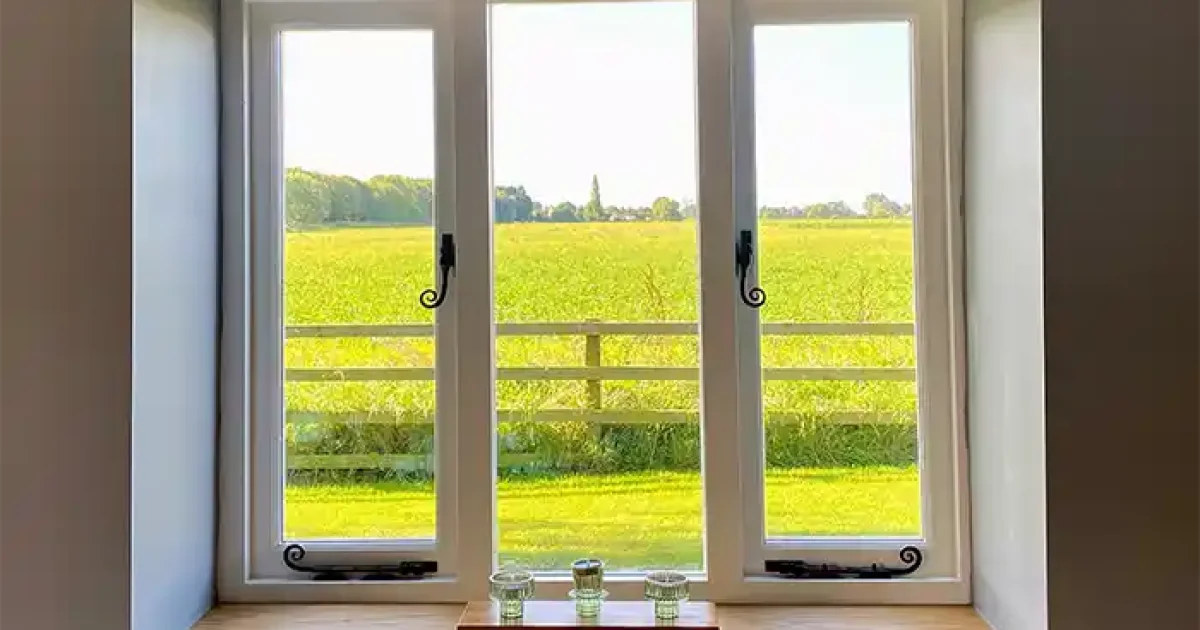
To master how to avoid structural window damage, one must first acknowledge that a window is a non-load-bearing element trapped in a load-bearing world. A primary misunderstanding among property owners is the belief that a cracked window pane or a “sticky” sash is a product defect. In reality, these are often the “canaries in the coal mine,” signaling that the structural header above the window is sagging or that the foundation is shifting. Preventing damage, therefore, begins not with the window, but with the “Rough Opening” (RO) and its ability to remain “square” under load.
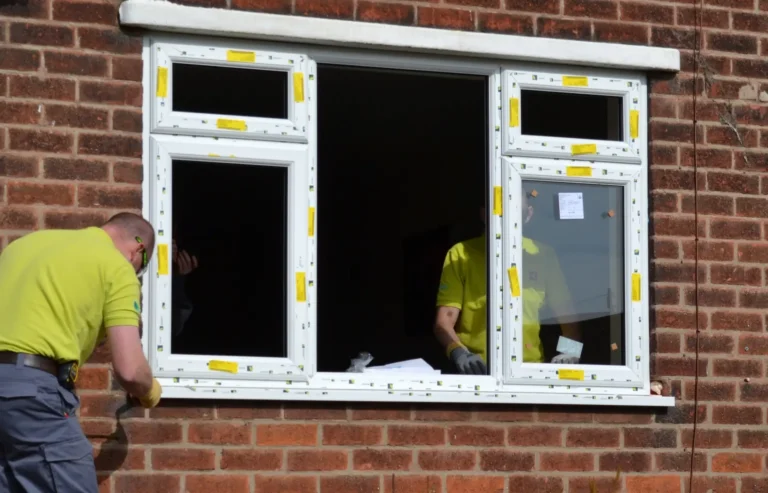
A common oversimplification involves the use of expanding spray foam during installation. This “frame-squeeze” prevents the sash from operating and puts constant stress on the glass seals. A sophisticated management plan recognizes that the gap around a window is not just for insulation; it is a critical “expansion zone” that allows the building to move without crushing the window.
Furthermore, the risk of “Fastener Binding” is a frequent point of failure. Effective damage avoidance relies on “Sliding Shims” or “Clip Systems” that hold the window securely against wind loads while allowing it to “slip” vertically as the building’s wooden plates shrink or the foundation finds its final equilibrium.
Deep Contextual Background: The Evolution of the Void
How to avoid structural window damage the history of avoiding structural damage to windows is essentially the history of the “Lintel.” In ancient masonry construction, windows were narrow and capped with massive stone headers or arches. The transition to timber-frame construction in the 19th century introduced the “Box Frame” window, where the weight-and-pulley system lived inside a hollow wooden box that provided a natural buffer against minor structural shifts.
The mid-20th century saw the rise of the “Picture Window” and the “Floor-to-Ceiling” glass wall. These innovations pushed the limits of structural spans. As headers grew longer to accommodate wider views, the potential for “deflection”—the slight bending of the beam under weight—increased exponentially. The building industry had to develop “Engineered Lumber” (like LVLs and Glulams) specifically to prevent the sagging that was shattering the large, expensive glass plates of modernist architecture.
Today, we deal with the “Light-Gauge” era, where thinner materials and faster construction cycles have made windows more vulnerable than ever. Modern uPVC (vinyl) windows, while thermally efficient, lack the inherent structural stiffness of old-growth timber or steel. This has moved the responsibility of damage prevention back to the framing and the precision of the “shim-space” management. We are now in a period where the chemistry of the sealant and the engineering of the header are as vital to the window’s survival as the glass itself.
Conceptual Frameworks and Mental Models How To Avoid Structural Window Damage
To analyze window integrity with professional rigor, the following models should be applied:
1. The “Differential Movement” Matrix
This framework accounts for the fact that wood, glass, and vinyl all react differently to temperature and moisture. Wood shrinks and swells across the grain; vinyl expands significantly in the sun; glass is relatively stable but brittle.
2. The “Path of Load” Visualization
In this model, one must “trace” the weight of the roof. If the load path reaches a window opening and find that the “Header-to-Jack-Stud” connection is insufficient, the load will “leak” into the window frame. Preventing damage requires a “Clear Path” around the aperture.
3. The “Hygrothermal Buffer”
This focuses on moisture as a structural threat. If water enters the rough opening due to poor flashing, it rots the jack studs. As the wood softens, it loses its ability to support the header, leading to structural sag that crushes the window. In this model, “Waterproofing” is “Structural Protection.”
Key Categories of Structural Threats
Avoiding damage requires a taxonomy of threats, categorized by their source and mechanical action.
| Threat Category | Mechanical Action | Primary Symptom | Prevention Strategy |
| Header Deflection | Vertical compression | Cracked glass at corners | Oversized engineered headers |
| Foundation Settlement | Diagonal racking | Sash binding/un-square frame | Soil compaction; Helical piles |
| Thermal Expansion | Lateral bowing | Failed weatherstripping | 1/4″ – 1/2″ expansion gaps |
| Fastener Over-Torque | Frame distortion | Difficult operation | Use of installation clips |
| Hygroscopic Rot | Material softening | Spongy sills; sagging frames | Integrated sill pan flashing |
| Wind-Load Flex | Dynamic oscillation | Sealant rupture | High DP-rated reinforcements |
Decision Logic: The “Squareness” Audit
If a window is failing, the decision logic must start with a Diagonal Measurement.
Detailed Real-World Scenarios How To Avoid Structural Window Damage
Scenario A: The “Wide-Span” Modern Farmhouse
A new build features a 12-foot wide “Window Wall” in a great room.
-
The Risk: A standard double-2×12 header will sag over a 12-foot span under a heavy snow load, crushing the luxury glass units below.
-
The Strategy: Utilize a steel “Flitch Plate” or a high-depth LVL (Laminated Veneer Lumber) header, pre-cambered to remain level under full load.
-
Failure Mode: Assuming the window frame can carry part of the roof load, leading to shattered tempered glass within two winter seasons.
Scenario B: The “Coastal” Vinyl Retrofit
Replacing old aluminum windows with vinyl in a high-wind, high-heat environment.
-
The Risk: The vinyl expands nearly 1/8 of an inch in the summer sun. If “tight-fit” into the old opening, it will bow and pop the glass seals.
-
The Strategy: Leave a minimum 3/8-inch shim space on all sides, filled with “Low-Pressure” flexible foam and capped with high-stretch silicone.
-
Result: The window “breathes” with the sun without stressing the structural welds of the frame.
Scenario C: The “Second-Story” Add-on
A new master suite is built above an existing living room with large windows.
-
The Risk: The new weight causes the lower floor’s headers to deflect, which they weren’t originally designed to handle.
-
The Strategy: Retroactively reinforcing the lower headers with steel “L-brackets” or sistering additional jacks before the second floor is loaded.
Planning, Cost, and Resource Dynamics How To Avoid Structural Window Damage
The economics of structural prevention follow the “1-10-100 Rule”: A dollar spent on planning/engineering saves $10 in installation correction and $100 in structural remediation later.
Tools, Strategies, and Support Systems
To ensure a window survives the life of the building, the following support systems must be integrated:
-
Laser Levels (Self-Leveling): Used to ensure the “Rough Sill” is perfectly level. A sloped sill creates a “racked” frame from day one.
-
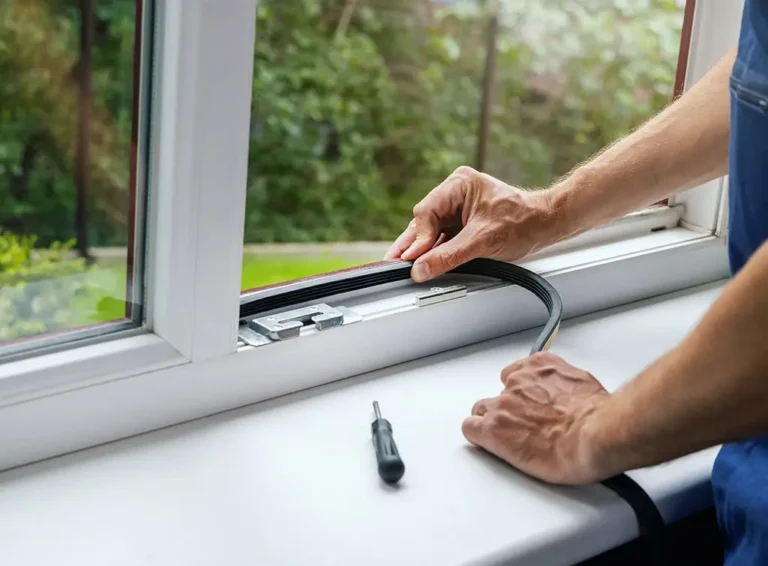
Installation Clips: These allow the window to be fastened to the interior or exterior of the wall without piercing the main frame, preserving the thermal and structural integrity.
-
Sill Pan Flashing (Rigid): A sloped, waterproof pan that sits under the window. It ensures that if water does get in, it drains out rather than rotting the structural jacks.
-
Low-Expansion (Closed Cell) Foam: Specifically formulated for windows to prevent “frame-squeeze.”
-
Shims (Composite): Unlike wood shims, composite shims do not rot or compress over time, maintaining the “gap” forever.
-
Structural Headers (LVL/PSL): Using “Parallel Strand Lumber” for wide spans to ensure zero deflection over 20+ years.
-
Movement Joints: Designing the exterior “trim” to be separate from the “window frame” so that the siding can move without pulling on the window.
Risk Landscape and Failure Modes How To Avoid Structural Window Damage
The “Risk Taxonomy” of structural window damage is a study in compounding errors.
-
The “Double-Header” Sag: Using two 2x10s for a 6-foot span. Over time, the “Creep” of the wood under constant load causes a 1/4-inch sag—enough to bind a casement window permanently.
-
Foundation “Heave”: In clay soils, the foundation may lift in one corner. This “racks” the entire wall, turning the rectangular window opening into a parallelogram.
-
The “Wet-Wood” Shrinkage: Installing windows into “Green” lumber (high moisture content).
-
Fastener “Corrosion-Jacking”: Using non-galvanized screws in a coastal zone. As the screw rusts, it expands (oxidative jacking), cracking the vinyl frame from the inside out.
Governance, Maintenance, and Long-Term Adaptation
Structural avoidance is not a “one-and-done” task; it requires a governance model of periodic review.
The Structural Integrity Checklist
-
Post-Construction (1 Year): Re-check the operation of all sashes. This is when “Initial Settlement” issues appear. If a sash is sticking, adjust the “keepers” or shims before the frame becomes permanently warped.
-
Annual: Inspect the “Miter Joints” of the window frames. If the miters are opening up, it indicates the frame is being “pulled” by the building’s exterior cladding.
-
5-Year Interval: Inspect the “Expansion Joint” sealant. If the sealant is torn (cohesive failure), it means the building is moving more than expected, and a higher-performance sealant is required.
Measurement, Tracking, and Evaluation How To Avoid Structural Window Damage
How do you evaluate if you have successfully avoided structural damage?
-
Leading Indicator: “Sash Clearance.” There should be a uniform 1/8-inch to 3/16-inch gap between the sash and the frame on all sides. Any “tapering” of this gap is a leading indicator of structural racking.
-
Lagging Indicator: “Seal Integrity.” If the “Argon Gas” remains inside the panes (no fogging) after 15 years, it proves the frame has not been subjected to enough structural stress to break the glass-to-spacer bond.
-
Documentation Example:
-
The “Pre-Sheetrock” Photo Log: Photos of every rough opening showing the header size, the shim placement, and the sill pan.
-
The “Diagonal Log”: A spreadsheet recording the diagonal measurements of every window frame post-installation to verify “Squareness.”
-
Common Misconceptions and Oversimplifications
-
Myth: “The window frame helps support the wall.” Reality: A window is a “floating” insert. If it is supporting the wall, it is failing.
-
Myth: “Expanding foam makes the window stronger.” Reality: Foam provides no structural strength and can actually damage the window if it’s the high-expansion type.
-
Myth: “Tempered glass is ‘structural’.” Reality: Tempered glass is stronger, but it is still brittle. Structural stress will still shatter it; it just breaks into safer pieces.
-
Myth: “Vinyl windows are ‘maintenance-free’.” Reality: While they don’t need paint, their high expansion rate makes them more dependent on “Structural Governance” than wood or aluminum.
-
Myth: “A sticky window just needs WD-40.” Reality: Lubrication hides the symptom. A sticky window is usually a “Mechanical Warning” that the frame is being compressed.
Conclusion: The Architecture of Resilience
To truly understand how to avoid structural window damage, one must view the window through the lens of equilibrium. By prioritizing the “Rough Opening” integrity, utilizing compliant fastening systems, and maintaining a rigorous “Expansion Zone,” the architect and builder protect the most expensive and vulnerable component of the building envelope. In the lifecycle of a high-performance building, the window that “floats” is the window that lasts.